

Table of Contents
Choosing the right hair color is about more than following the latest beauty trends. The ideal shade should complement your skin tone, work with your natural hair color and reflect your personal style.
Whether you prefer warm brown, caramel highlights, elegant blonde or a deeper chocolate shade, understanding the different hair color options can help you make a more confident decision. Before changing your look, it is also important to consider your hair’s condition, previous coloring history and the maintenance required.
In this guide, discover how to choose a hair color that suits you and what to consider before your next salon appointment in Tangier.
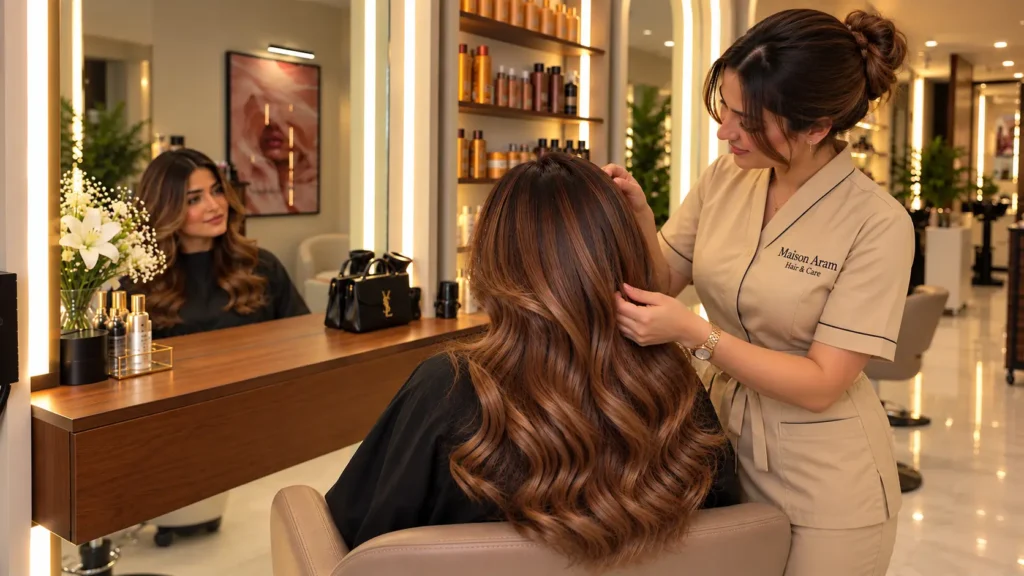
How to Choose the Right Hair Color for Your Skin Tone
Your skin tone and undertone can help you identify hair colors that complement your natural features. Although they are useful guidelines, they should not limit your personal preferences.
Warm Skin Undertones
Warm undertones often have golden, peachy or yellowish nuances.
Hair colors worth exploring include:
- Honey blonde
- Golden brown
- Caramel
- Copper
- Warm chocolate brown
- Auburn
These shades can create a harmonious look with warm complexions.
Cool Skin Undertones
Cool undertones generally have pink, reddish or bluish nuances.
Some hair color options include:
- Ash blonde
- Cool brown
- Mushroom brown
- Burgundy
- Espresso brown
- Icy blonde
Cool shades can create an elegant contrast with certain complexions.
Neutral Skin Undertones
Neutral undertones combine warm and cool characteristics. This often allows greater flexibility when choosing a hair color.
You can explore:
- Beige blonde
- Chestnut brown
- Soft caramel
- Chocolate brown
- Neutral brunette
- Rose brown
The final choice should also take into account your natural hair color and the look you want to achieve.
Popular Hair Color Ideas to Consider
Hair color offers many possibilities, from subtle changes to more noticeable transformations. Here are some popular shades to consider.
Chocolate Brown Hair Color
Chocolate brown is a rich brunette shade that can add visual depth and warmth to the hair.
It is worth considering if you prefer:
- A sophisticated brunette look.
- A deeper alternative to lighter brown.
- A natural-looking color direction.
- A shade that works with different hairstyles.
Caramel Hair Color
Caramel hair color combines warm brown and golden nuances. It can be used as an overall color inspiration or incorporated into highlights for added dimension.
It is particularly interesting for women who want to introduce warmth and variation without choosing an extremely light blonde.
Blonde Hair Color
Blonde comes in many variations, including:
- Golden blonde
- Ash blonde
- Beige blonde
- Honey blonde
- Platinum blonde
- Champagne blonde
The right option depends on your starting hair color, desired level of lightness and the condition of your hair.
Going from dark brown or black to a very light blonde may require several stages of lightening.
Copper Hair Color
Copper hair color introduces warm red and orange nuances. Depending on its intensity, it can create anything from a subtle auburn appearance to a more vibrant transformation.
Consider whether you prefer a soft copper, light ginger or deeper auburn shade.
Understanding Different Hair Coloring Techniques
Choosing a shade is only one part of the process. The coloring technique also influences the final appearance.
All-Over Hair Color
All-over hair color involves applying a color throughout the hair to create a more uniform appearance.
It can be considered when you want to:
- Change your overall hair shade.
- Darken your natural color.
- Refresh an existing color.
- Explore a different brunette, blonde or red shade.
Hair Highlights
Highlights introduce lighter or contrasting strands into the natural or colored base.
Depending on their placement and thickness, they can create subtle brightness or a more noticeable contrast.
Balayage
Balayage is a freehand coloring technique used to create blended, dimensional highlights.
It is often chosen by women who prefer a softer transition between their natural base and lighter lengths.
Unlike traditional highlights, balayage does not necessarily create uniform lightened strands from root to tip.
Ombre Hair Color
Ombre creates a gradual transition between two or more shades, generally moving from darker roots towards lighter ends.
It can be adapted to different color combinations, depending on the desired contrast.
What to Consider Before Coloring Your Hair
Before choosing a new hair color, take a moment to evaluate a few important factors.
Your natural hair color
Your starting shade influences how easily you can achieve your desired color. Dark hair may require lightening before certain blonde or lighter shades become achievable.
Your previous coloring history
Previous dye, highlights, bleach or other chemical treatments can influence how your hair responds to a new color.
Be sure to communicate your coloring history before the appointment.
Your hair condition
Hair that is already dry, fragile or chemically processed may require particular attention before another coloring service.
A professional assessment can help determine whether your desired transformation is appropriate.
Your lifestyle and maintenance preferences
Some shades require more frequent root touch-ups or color-refreshing appointments than others.
Think about how much time you are comfortable dedicating to maintaining your new look.
Your personal style
The most important consideration is choosing a color that makes you feel comfortable and confident. Skin tone recommendations are useful starting points, not strict rules.
How to Maintain Your Hair Color
Maintaining colored hair requires a consistent care routine. The right approach depends on the coloring technique, hair condition and products used.
Here are some general recommendations:
- Use color-friendly hair care: Choose shampoo and conditioner formulated for colored hair.
- Avoid excessive heat: Frequent use of straighteners and curling irons can contribute to dryness and color fading.
- Protect your hair from sunlight: Prolonged sun exposure can affect the appearance of certain hair colors.
- Maintain hydration: Conditioning products and suitable hair masks can help improve the feel and manageability of colored hair.
- Follow an appropriate maintenance schedule: Root regrowth and fading vary according to the chosen color and technique.
If you notice unusual dryness or breakage after coloring, consider professional advice before another chemical treatment.
Choosing Hair Color at a Professional Salon in Tangier
Selecting a new hair color can be challenging when you have several shades and techniques in mind.
A professional color consultation can help you evaluate your natural hair color, skin undertone, previous treatments and desired result.
It is also an opportunity to discuss practical considerations, such as the level of maintenance involved and whether your hair is suitable for the transformation you want.
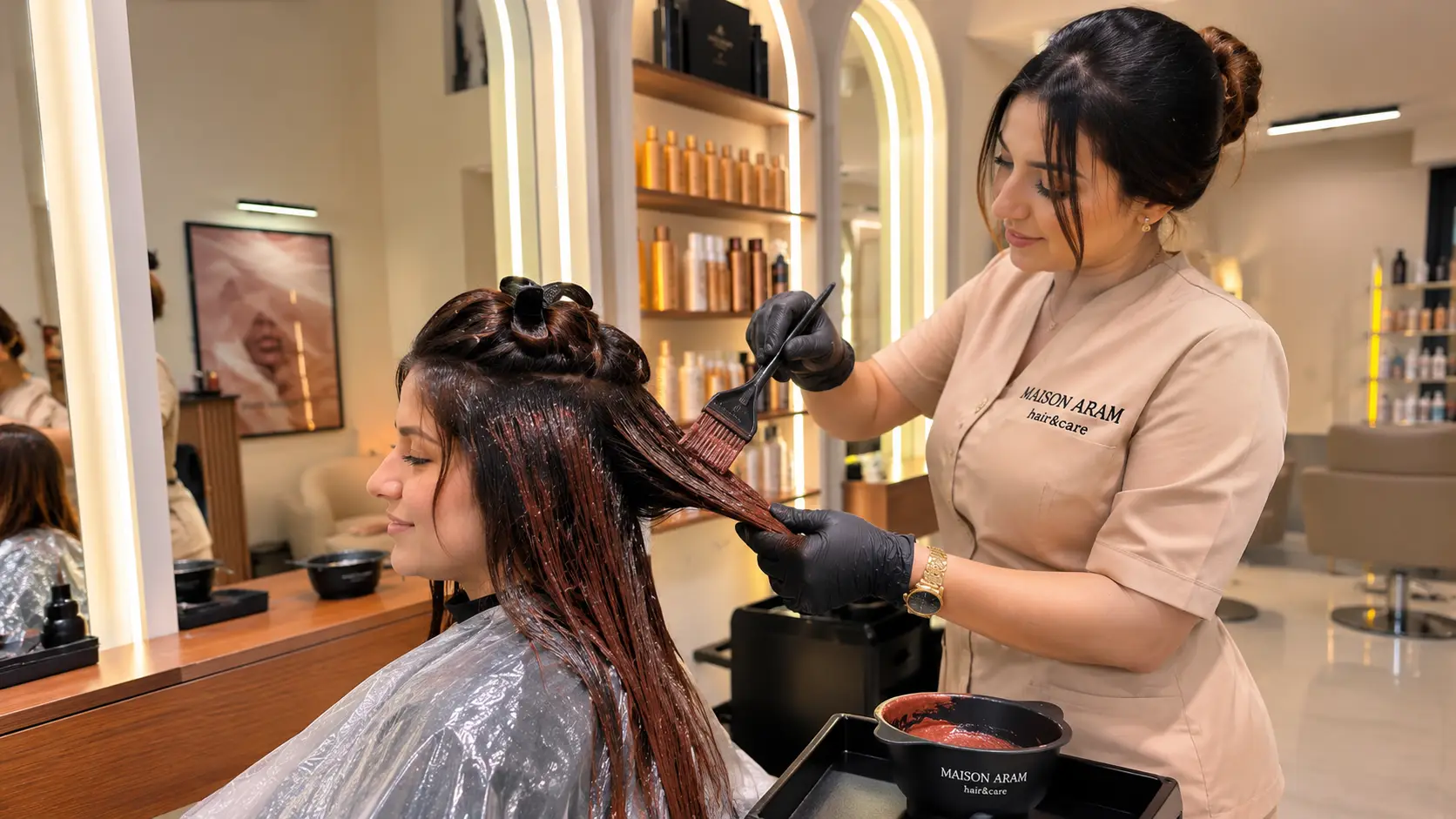
For women looking for hair coloring services in Tangier, Maison Aram is a local destination to explore when considering a new hair look.
Before choosing a color, bring inspiration pictures and explain what you like about each look. This helps make the discussion more precise and realistic.
FAQ
1. How do I choose the best hair color for my skin tone?
Start by identifying whether your skin undertone is warm, cool or neutral. Warm undertones often work well with golden and caramel shades, while cool undertones may complement ash and cooler brown shades. Neutral undertones offer more flexibility.
These are general guidelines rather than strict rules.
2. What is the most natural-looking hair color?
A shade close to your natural hair color is often a good starting point for a subtle transformation. Natural-looking results can also be achieved through techniques such as soft highlights and blended balayage.
3. What is the difference between hair color and hair highlights?
Hair color generally refers to changing or enhancing the overall shade of the hair. Highlights introduce lighter or contrasting strands into selected sections to create dimension.
4. Is balayage better than traditional highlights?
Neither technique is universally better. Balayage generally creates a softer, blended transition, while traditional highlights can produce more defined and evenly distributed lighter sections. The choice depends on your desired appearance and maintenance preferences.
5. How long does hair color last?
It depends on the type of color, the hair’s condition, washing frequency and maintenance routine. Permanent color remains in the treated hair but natural roots grow out, while temporary and semi-permanent colors gradually fade.
6. Can I change dark hair to blonde?
Yes, but the process depends on your natural shade, previous coloring history and hair condition. Significant lightening may require multiple sessions to reach the desired result while taking the hair’s condition into consideration.
Conclusion
Choosing the right hair color involves understanding your skin undertone, natural hair shade, personal preferences and maintenance expectations.
From chocolate brown and caramel to blonde, copper and balayage, there are many possibilities for creating a look that reflects your personality.
Taking the time to discuss your ideas and your hair’s history before coloring can help you make a more informed decision.
If you are exploring a new hair look in Tangier, Maison Aram can be part of your search for a hair coloring service that matches your preferences.