

Table of Contents
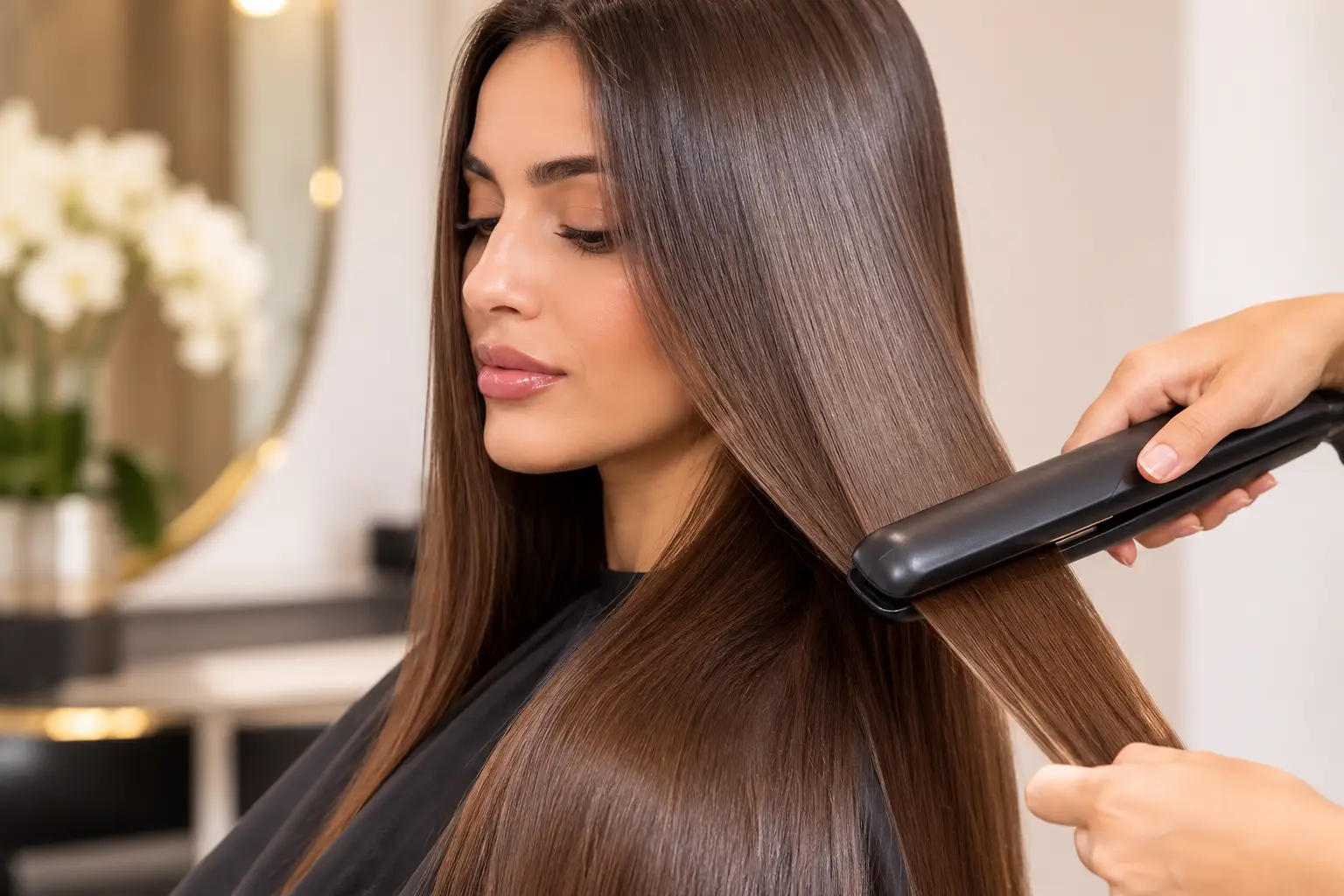
Japanese hair straightening is a permanent chemical hair treatment designed to transform naturally wavy, curly or frizzy hair into a straighter, smoother texture. Also known as Japanese thermal reconditioning, this technique changes the internal structure of treated hair rather than simply coating the strands to reduce frizz.
Before choosing Japanese hair straightening, it is important to understand how the treatment works, which hair types may be suitable, its potential disadvantages and how it differs from keratin treatments. This guide will help you make a more informed decision about your hair.
What Is Japanese Hair Straightening?
Japanese hair straightening is a professional chemical treatment that permanently changes the shape of the treated hair.
Unlike temporary styling methods, which straighten hair using heat alone, thermal reconditioning works by altering the internal bonds responsible for the hair’s natural shape. A chemical solution is applied, the hair is straightened using controlled heat, and a neutralizing product helps stabilize the new structure.
The result is typically very straight, smooth-looking hair.
One important distinction: the treated lengths remain straight, but newly growing hair retains its natural texture. This means that curls or waves may gradually become visible again at the roots.
How Does Japanese Hair Straightening Work?
Japanese thermal reconditioning involves several stages. The exact process depends on the products used and the condition of the hair.
1. Hair Assessment
Before starting, a professional should examine the hair’s condition and discuss its history.
Previous bleaching, colouring, chemical straightening and heat damage are important factors because they can affect how the hair responds to the treatment.
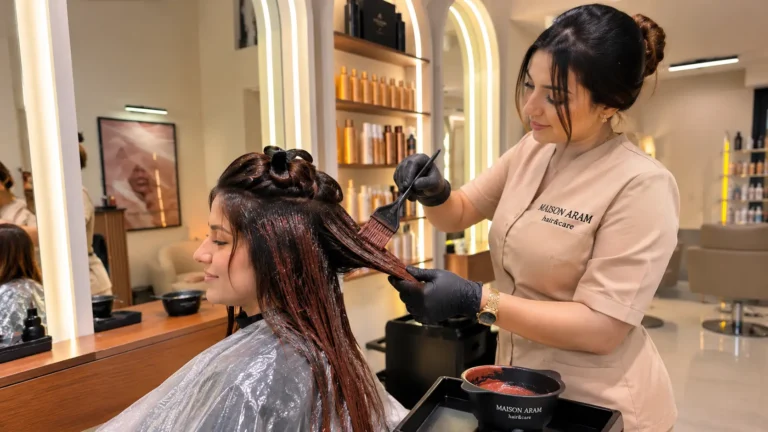
2. Application of the Straightening Solution
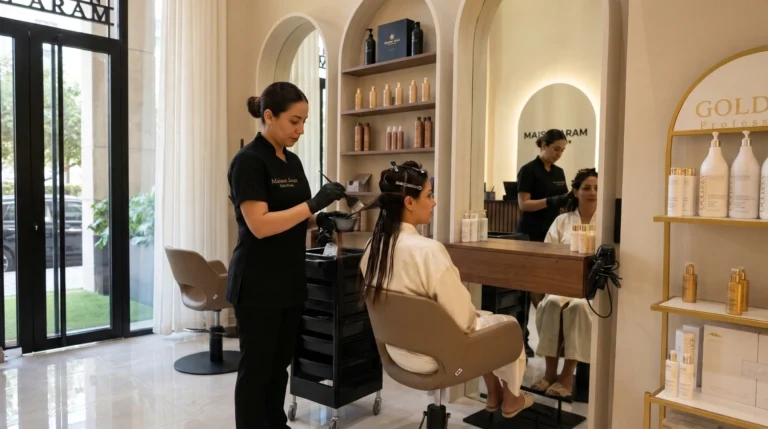
A chemical solution is applied to help modify the internal bonds that give the hair its natural texture.
The formulation and processing time depend on the product and the hair’s condition.
3. Rinsing and Heat Straightening
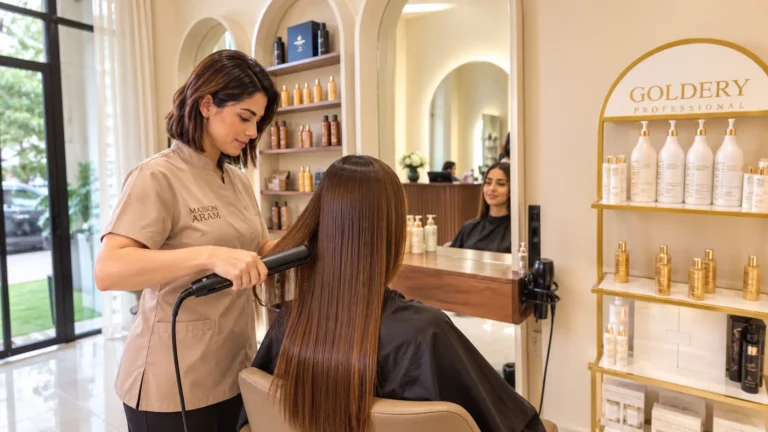
After the appropriate processing time, the product is rinsed out. The hair is then dried and carefully straightened in small sections using a flat iron.
This stage helps establish the straighter shape.
4. Neutralization
A neutralizing solution is applied to stabilize the newly formed hair structure.
The hair is then rinsed and styled according to the professional’s instructions.
The exact products, temperatures and processing times vary. A professional should follow the manufacturer’s instructions and assess the hair before proceeding.
What Are the Benefits of Japanese Hair Straightening?
Japanese hair straightening can be appealing to women who prefer a consistently straight hairstyle.
Potential benefits include:
- Long-lasting straightness: Treated hair generally remains straight rather than gradually returning to its original texture.
- Reduced styling time: Hair may require less daily straightening with styling tools.
- A smoother appearance: The treatment can create a sleek, polished finish.
- Less visible frizz: Straightened hair may be easier to manage in humid conditions.
- A consistent hairstyle: The treated lengths maintain their straighter appearance as they grow out.
However, these benefits depend on the original hair condition, the treatment process and subsequent care. Japanese straightening is not suitable for everyone.
Is Japanese Hair Straightening Suitable for Every Hair Type?
No. Japanese hair straightening is a strong chemical process, and suitability depends on the hair’s texture, condition and previous treatments.
Hair That May Be Suitable
Some people with naturally wavy, curly or frizz-prone hair may consider this treatment when their goal is a permanently straighter appearance.
However, suitability cannot be determined by hair texture alone.
Hair That Requires Extra Caution
Particular care is necessary when hair is:
- Bleached or heavily highlighted.
- Fragile or prone to breakage.
- Already damaged by chemical treatments.
- Previously relaxed or chemically straightened.
- Very dry or weakened by repeated heat styling.
Combining incompatible chemical treatments can increase the risk of damage and breakage.
A professional hair assessment is essential before making a decision.
Japanese Hair Straightening vs. Keratin Treatment
Japanese hair straightening and keratin treatments are often confused because both aim to create smoother-looking hair. However, they work differently and offer different types of results.
| Feature | Japanese Hair Straightening | Keratin Treatment |
|---|---|---|
| Main purpose | Permanently straighten treated hair | Smooth hair and reduce frizz |
| How it works | Chemically changes internal hair bonds | Smooths the hair using a treatment formulation |
| Results | Very straight appearance | Smoother, more manageable appearance |
| Longevity | Permanent on treated lengths | Usually temporary |
| Natural texture | New growth retains its original texture | Texture gradually returns as the treatment wears off |
| Considerations | Requires careful assessment due to chemical processing | Formula and suitability vary by product |
The main difference is the level of transformation.
Japanese hair straightening is designed for people seeking a very straight result. Keratin treatments are generally considered by those who want smoother, softer-looking hair and less frizz without necessarily eliminating their natural texture.
Neither option is automatically better. The right choice depends on your hair condition and styling preferences.
How Long Does Japanese Hair Straightening Last?
Japanese hair straightening is considered permanent on the sections of hair that have been treated.
Unlike temporary smoothing treatments, the straightened lengths do not gradually return to their original texture through normal washing.
However, natural hair continues to grow. As new hair appears at the roots, it retains its original texture, creating a visible difference between the treated lengths and the new growth.
The timing of any maintenance depends on hair growth, length, texture and personal preferences. A professional can advise whether additional treatment is appropriate.
How to Care for Your Hair After Japanese Straightening
Aftercare is important for maintaining the appearance and condition of chemically straightened hair.
Here are some useful considerations:
- Follow the initial waiting period: Ask your stylist when you can wash, tie or clip your hair after the procedure. Instructions depend on the treatment system.
- Choose gentle hair products: Use products appropriate for chemically treated hair.
- Condition regularly: Conditioning can help improve softness and manageability.
- Limit excessive heat: Avoid unnecessary high-temperature styling.
- Be careful with additional chemical services: Discuss colouring, bleaching or other straightening treatments with a professional before combining them.
- Trim damaged ends when needed: Regular haircuts can help maintain a neater appearance.
Remember that aftercare supports the condition of the hair but does not reverse the chemical changes made during Japanese straightening.
Is Japanese Hair Straightening Safe for Your Hair?
Japanese hair straightening can affect hair strength because it involves chemical processing and heat.
If the hair is already weakened, overprocessed or unsuitable for the treatment, the risk of dryness, breakage and loss of elasticity may increase.
Before booking, consider asking the professional:
- Is my current hair condition suitable for this treatment?
- How will previous colouring or bleaching affect the process?
- Which products will be used?
- What precautions should I follow afterward?
- What alternatives would be more appropriate for my hair?
A careful assessment is more important than choosing a treatment simply because it promises very straight hair.
Choosing a Hair Straightening Treatment in Tangier
If you are considering Japanese hair straightening in Tangier, take time to understand the treatment being offered before making an appointment.
The name of a service alone does not always explain its formula or the way it works. In particular, Japanese thermal reconditioning should not be confused with Japanese-inspired hair repair treatments, which may focus on conditioning and improving the appearance of damaged hair rather than permanently straightening it.
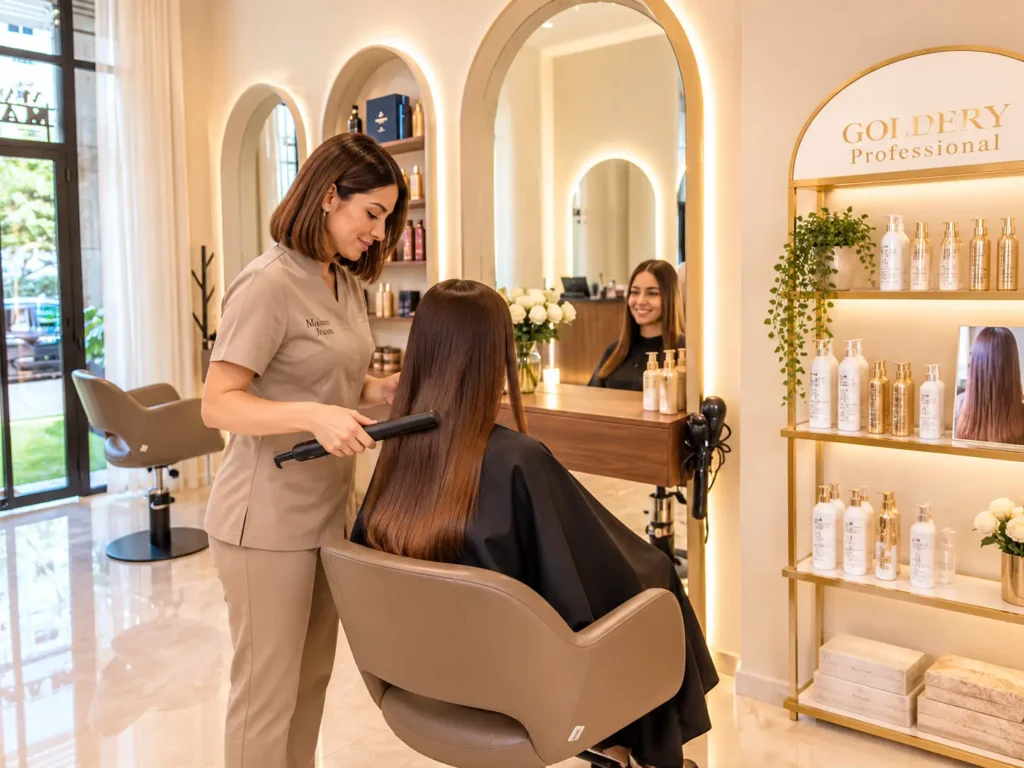
At Maison Aram, women looking for hair services in Tangier can explore the available hair treatments and choose the option that corresponds to their needs.
If you are unsure which treatment to choose, discuss your hair texture, previous chemical services and desired result before booking. The objective should be to select an approach that takes the condition of your hair into account.
Frequently Asked Questions
1. Is Japanese Hair Straightening Permanent?
Yes. Japanese hair straightening permanently changes the structure of the treated hair. The straightened lengths remain straight, while newly growing hair retains its natural texture.
2. Does Japanese Hair Straightening Damage Hair?
The treatment can weaken hair because it involves chemical processing and heat. The risk depends on the hair’s initial condition, previous treatments and how the procedure is performed.
3. Can I Get Japanese Hair Straightening on Coloured Hair?
It depends on the type of colouring, the condition of the hair and the products previously used. Bleached or heavily processed hair requires particular caution. A professional assessment is recommended before treatment.
4. What Is the Difference Between Japanese Straightening and Brazilian Keratin?
Japanese straightening permanently alters the structure of treated hair to create a straighter appearance. Brazilian keratin treatments generally focus on smoothing the hair and reducing frizz, with results that gradually fade.
5. Can Japanese Hair Straightening Remove Natural Curls?
It is designed to permanently straighten the treated sections, including naturally curly hair that is suitable for the procedure. However, results and suitability depend on hair texture and condition.
6. Is Japanese Hair Straightening the Same as a Japanese Hair Repair Treatment?
No. Japanese hair straightening is a chemical straightening technique. Japanese-inspired repair treatments are generally designed to condition or improve the appearance of hair. They do not necessarily change its natural structure or permanently straighten it.
Conclusion
Japanese hair straightening offers a long-lasting way to achieve very straight hair by chemically changing the structure of treated strands. However, its permanent nature, processing requirements and potential impact on hair health make it a treatment that deserves careful consideration.
Before choosing between Japanese straightening and a keratin treatment, think about your desired result, your hair’s current condition and your previous chemical services.
The best choice is not necessarily the strongest treatment, but the one that is appropriate for your hair and your expectations.
Explore the hair services available at Maison Aram in Tangier and find out which option may suit your hair needs.